Explain
Translate technical arbitration concepts into structured, readable English.
About
arbitresearch develops accessible, source-led explanations of international arbitration rules, case law, procedure and emerging developments for readers who value clarity without oversimplification.
International arbitration explained | Rules, case law, procedure and emerging developments
International arbitration often sits at the intersection of different legal systems, institutional rules and procedural choices. arbitresearch exists to make those intersections easier to understand without presenting complex questions as simpler or more universal than they are.
Our work begins with a precise question. We identify the applicable legal or procedural framework, distinguish binding authority from non-binding guidance and commentary, and explain why the issue matters in practice. Jurisdiction, applicable rules, dates and important qualifications remain visible rather than being reduced to footnotes.
Translate technical arbitration concepts into structured, readable English.
Ground material claims in judgments, treaties, legislation, institutional rules and official materials.
State the limits of each explanation and avoid turning context-specific conclusions into universal rules.
Our concise social publications introduce focused questions. News & Analysis currently gathers those publications in one place and links to their original discussions. Longer English editions will add context, sources and practical significance as the archive grows.
arbitresearch covers arbitration fundamentals, institutional and procedural questions, case law and emerging developments. The project is educational and does not provide legal advice. Readers should expect careful distinctions, direct links to primary materials where available and transparent limits around every conclusion.
Co-Founder
Co-Founder
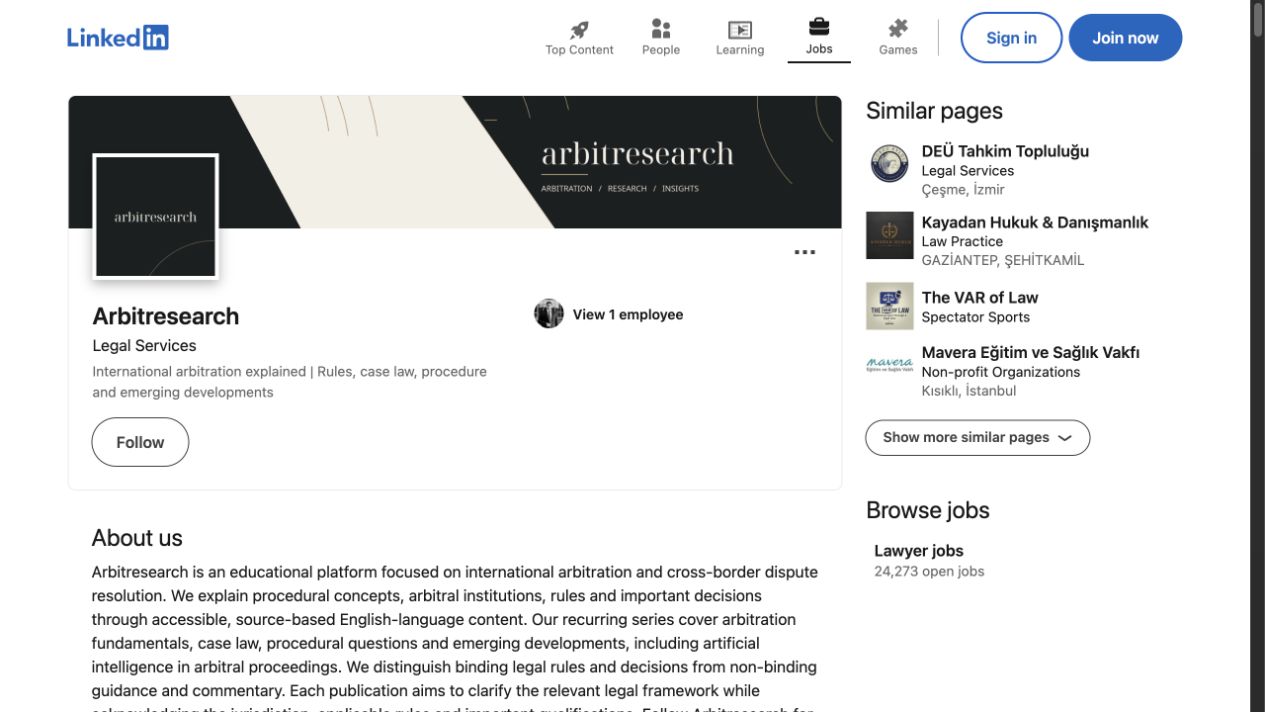
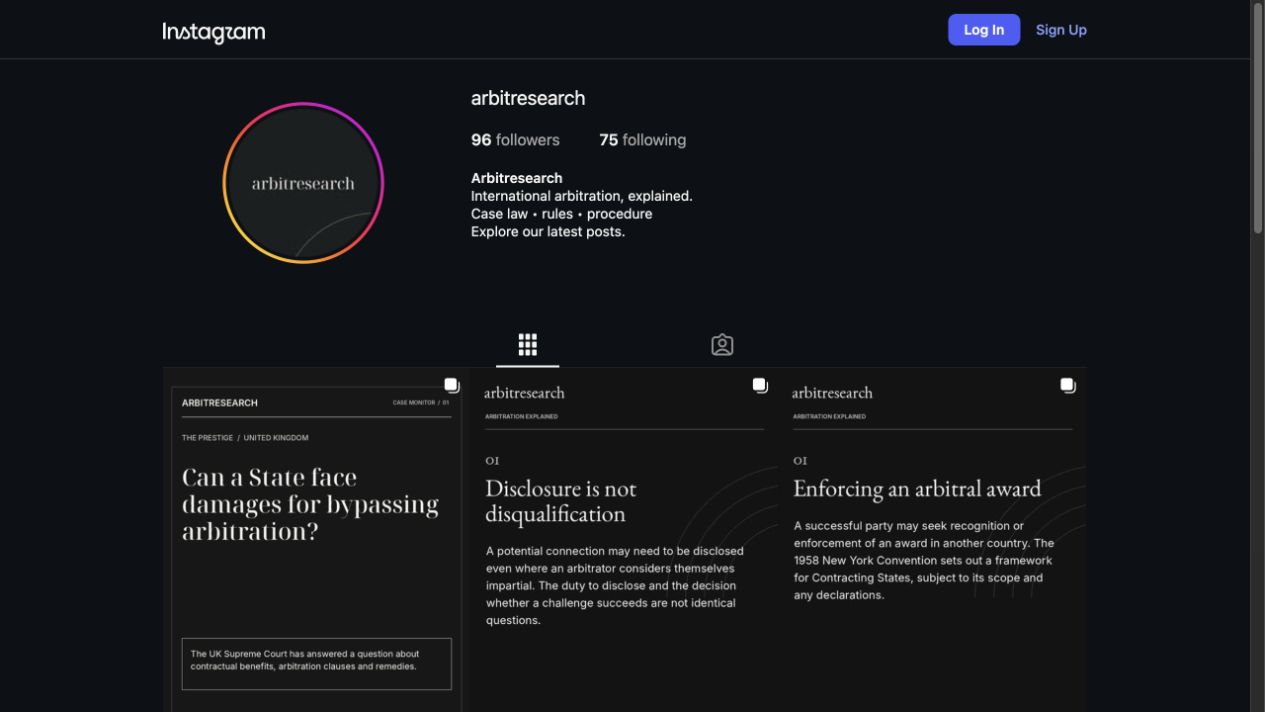
Preview each public profile before opening it. Both cards lead to the official arbitresearch accounts.